
Payment Options
 Cash App
 Apple Pay
 PayPal
 Crypto (USDC)
$10 USPS Priority Shipping
Estimated delivery: 2–5 business days. Delivery times may vary.
Orders of $500 or more ship free. Final shipping details at checkout.
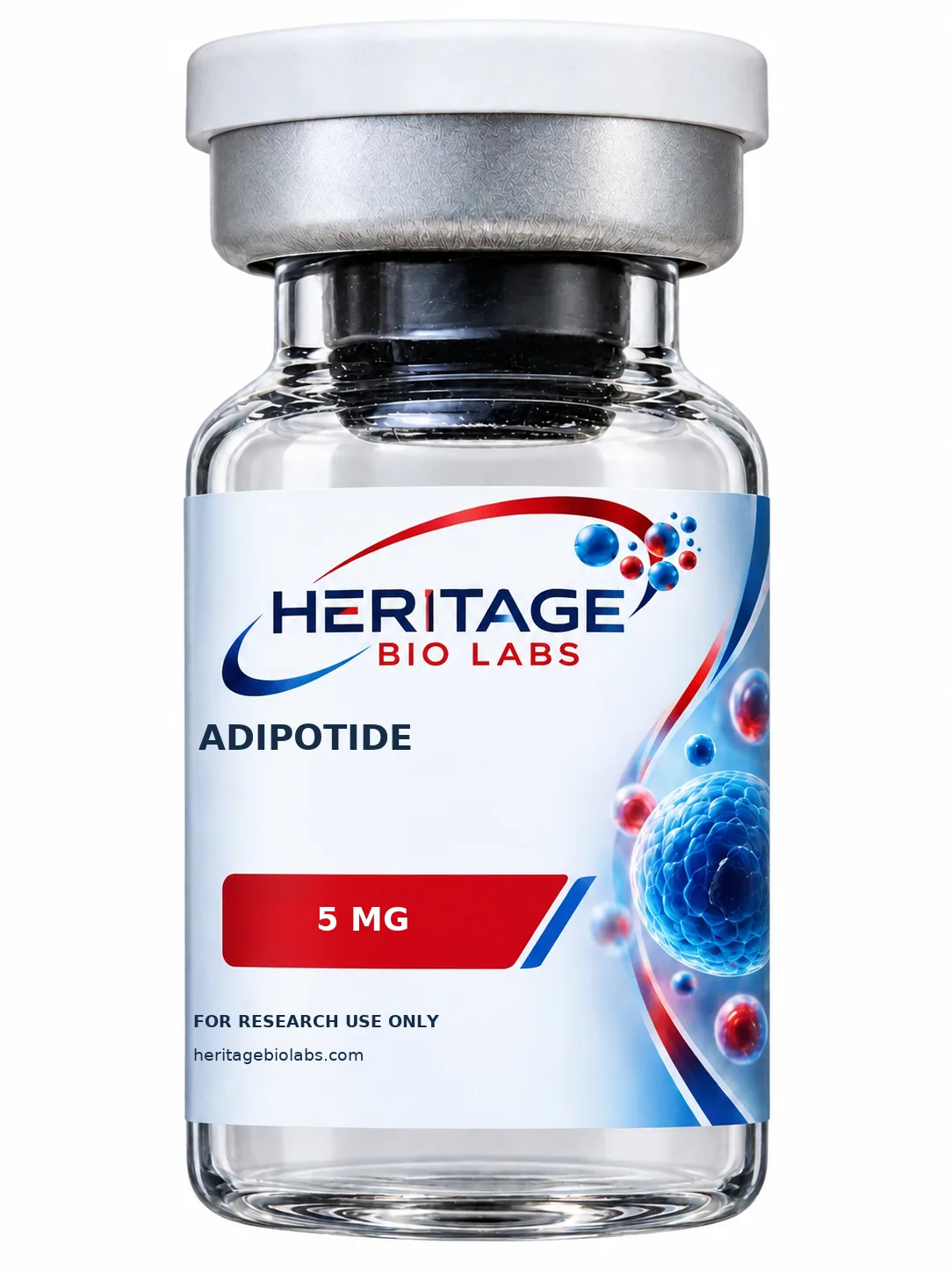
Adipotide — 5 mg
$19.49
Adipotide is a vascular-targeting peptidomimetic investigated for reducing white fat. Its research combines recognition of fat-associated blood vessels with a cell-death-inducing component; obese-monkey studies reported weight loss and improved insulin resistance. For research use only; not for human or veterinary use.
Full description
Educational research context. The cited studies and supplier descriptions do not verify the identity, testing, or effects of this Heritage product.
Adipotide, also called prohibitin-targeting peptide 1 or prohibitin-TP01, is a designed peptidomimetic with two functional parts. One targets a vascular marker associated with white adipose tissue; the other is intended to damage mitochondria and trigger apoptosis after entering the targeted cells. The conceptual approach is therefore to affect the blood vessels supporting fat tissue rather than directly imitate an appetite hormone or activate a conventional fat-cell metabolic receptor. Umbrella Labs describes the target as prohibitin on blood vessels feeding adipose tissue. [1,2]
Barnhart and colleagues studied the compound in obese Old World monkeys and reported loss of body weight and white adipose tissue together with improved insulin-resistance measures. Their paper links these changes to targeted vascular apoptosis and also discusses reduced food intake during treatment. These are nonhuman-primate observations, not results from an established human weight-loss intervention. The same research program identified dose-related renal findings, including kidney lesions in a formal animal safety study, which form part of the published description. [1] The seller presents adipotide as a laboratory research reagent and cites the monkey study. [2] “Adipotide” therefore identifies a particular targeting construct, not a general name for all fat-reducing peptides.
Sources
- Barnhart et al.—Adipotide in obese monkeysLiterature record (study type requires review)
- Umbrella Labs—AdipotideSupplier listing (not independent scientific evidence)
For research use only. Not for human or veterinary use; not medical advice.