
Payment Options
 Cash App
 Apple Pay
 PayPal
 Crypto (USDC)
$10 USPS Priority Shipping
Estimated delivery: 2–5 business days. Delivery times may vary.
Orders of $500 or more ship free. Final shipping details at checkout.
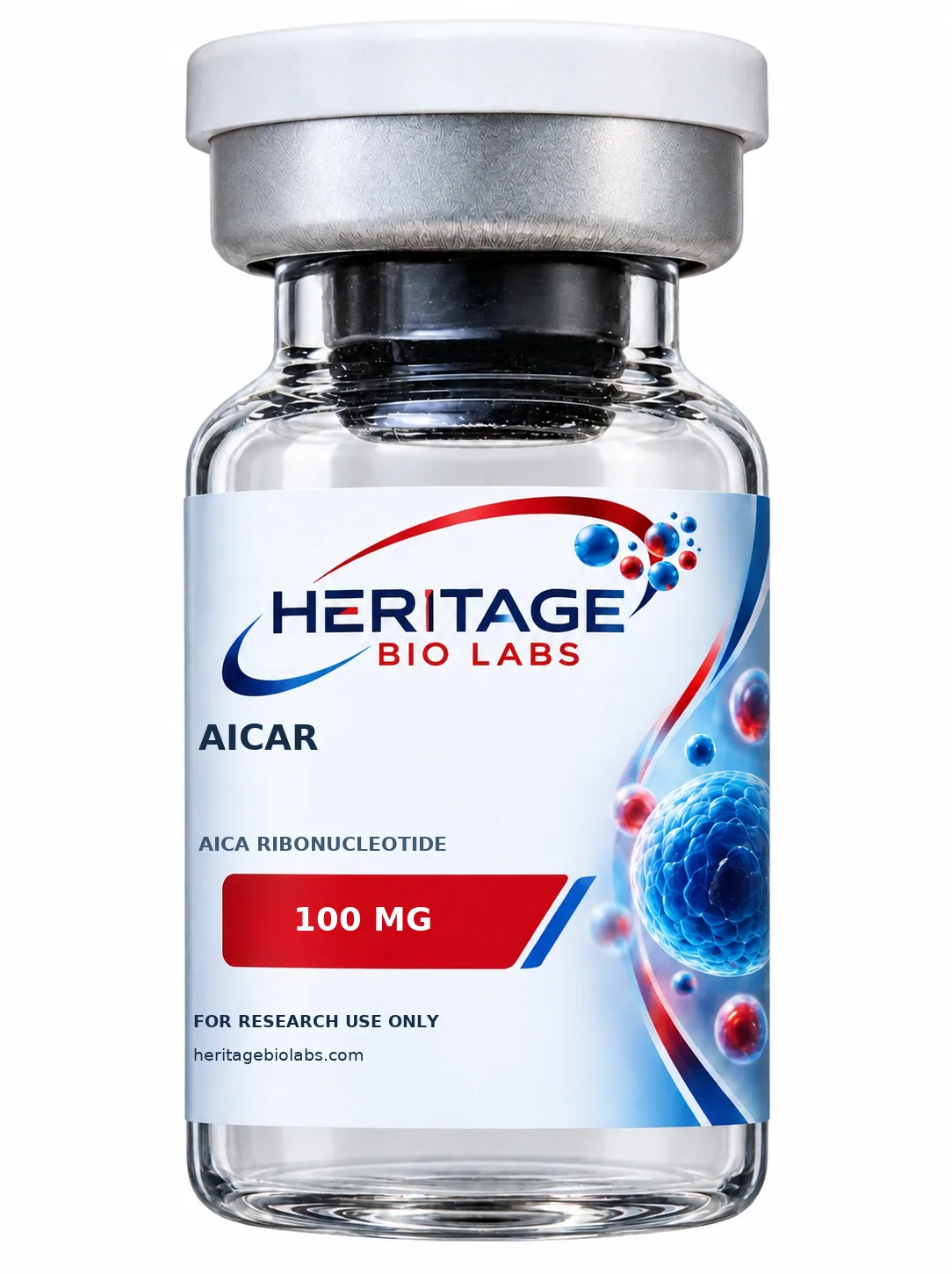
AICAR — 100 mg
$23.99
AICAR usually denotes acadesine, a nucleoside research compound rather than a peptide. Sources associate it with cellular energy-sensing pathways, AMPK activation, altered metabolism, and increased running endurance in a mouse experiment. For research use only; not for human or veterinary use.
Full description
Educational research context. The cited studies and supplier descriptions do not verify the identity, testing, or effects of this Heritage product.
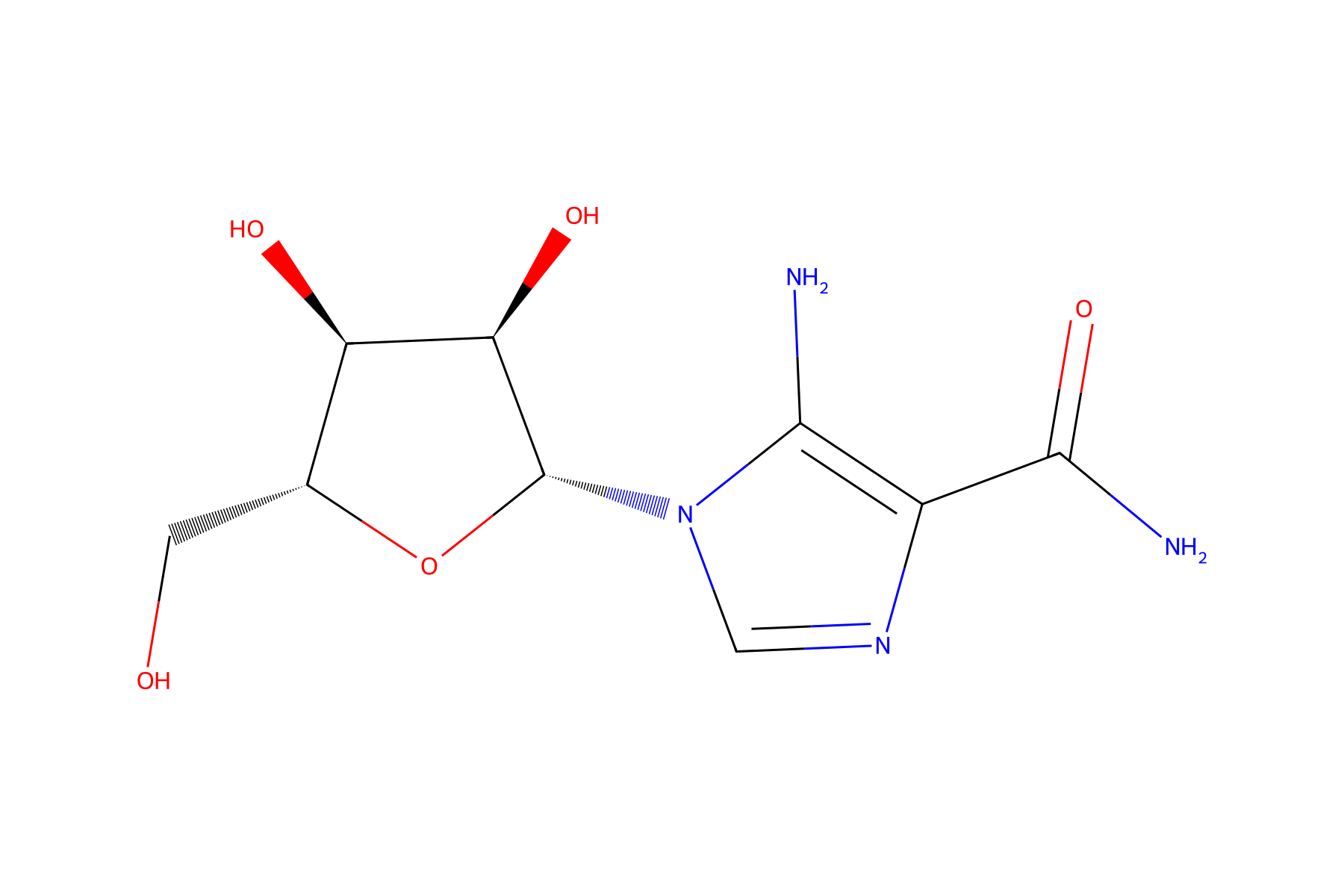
AICAR commonly denotes 5-aminoimidazole-4-carboxamide riboside, also called acadesine or AICA-riboside. It is a small nucleoside molecule, not an amino-acid-chain peptide. Terminology needs care because AICAR is also used in biochemical contexts for the phosphorylated ribonucleotide; the riboside is converted inside cells to the monophosphate ZMP. A primary chemistry paper describes this phosphorylation and the resulting association with AMP-activated protein kinase, the cellular energy-sensing enzyme AMPK. [1]
Cayman Chemical markets the riboside as an AMPK research activator and summarizes cell experiments involving reduced fatty-acid and sterol synthesis, altered glucose transport, and inflammatory signaling. Those descriptions concern particular cell systems, not one universal metabolic response across tissues. [2] In the widely cited study by Narkar and colleagues, sedentary mice receiving AICAR showed altered metabolic-gene expression and a reported 44% increase in running endurance. The authors framed this as an exercise-mimetic approach to AMPK-linked pathways. [3] This is the source of much endurance-oriented language surrounding AICAR, but it remains an animal-model result. A product identity should specify acadesine/AICA-riboside versus the nucleotide rather than relying on the acronym alone.
Sources
- Acadesine analogues and phosphorylation to ZMPExternal reference (requires review)
- Cayman Chemical—AICARExternal reference (requires review)
- Narkar et al.—AMPK and PPARδ exercise mimeticsLiterature record (study type requires review)
For research use only. Not for human or veterinary use; not medical advice.