
Magnum Pilot Freeze Dryer
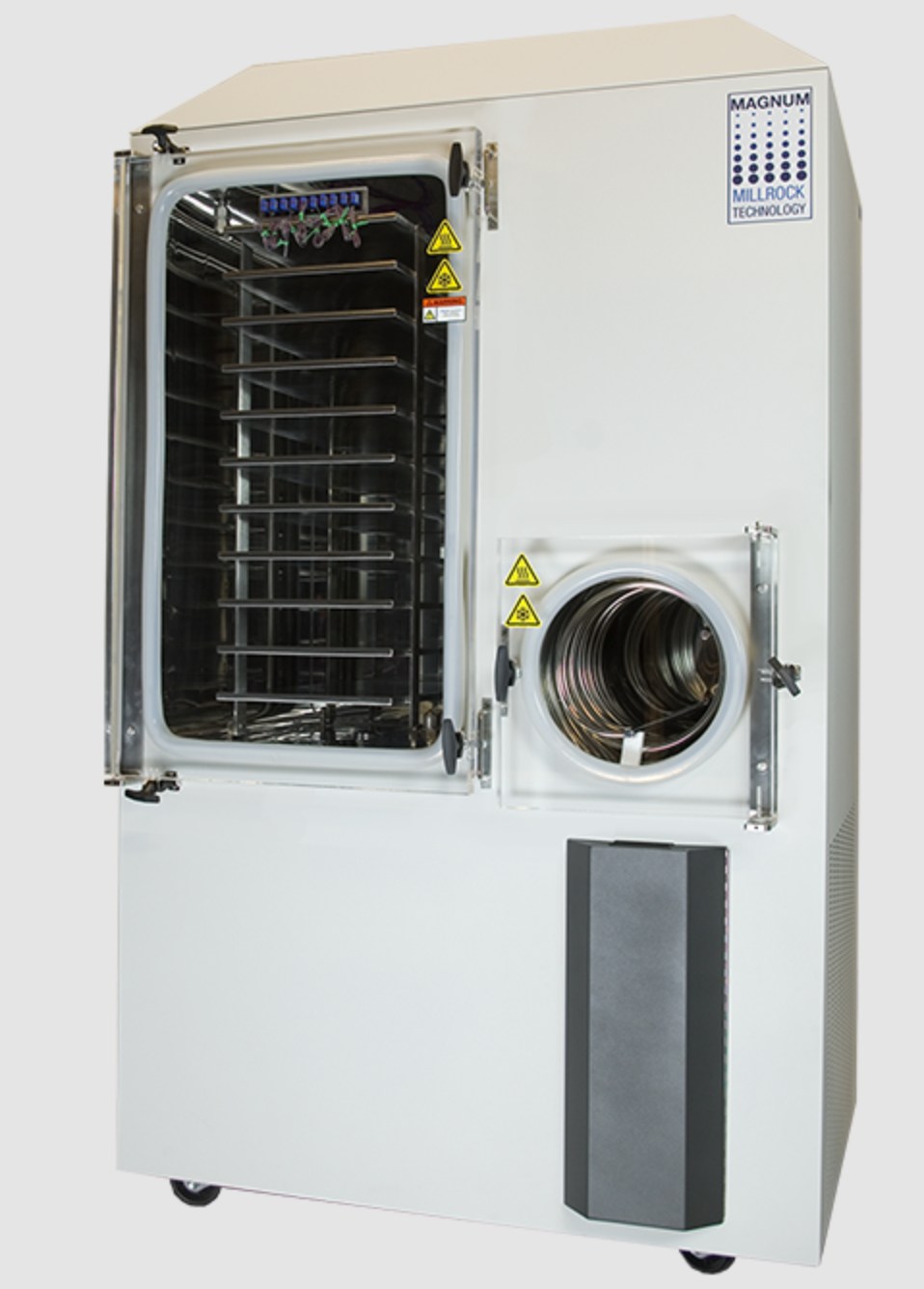
The Magnum Pilot Freeze Dryer is a pilot-scale lyophilizer made by Millrock Technology for process development and small production runs. Lyophilization, also called freeze-drying, removes water from a frozen sample under vacuum.
How the machine works
Temperature-controlled shelves cool the samples first and supply controlled heat during drying. A vacuum pump lowers the pressure in the chamber. A separate cold condenser collects the water vapor as ice. The machine controls shelf temperature and chamber pressure through the cycle.
The three stages of freeze-drying

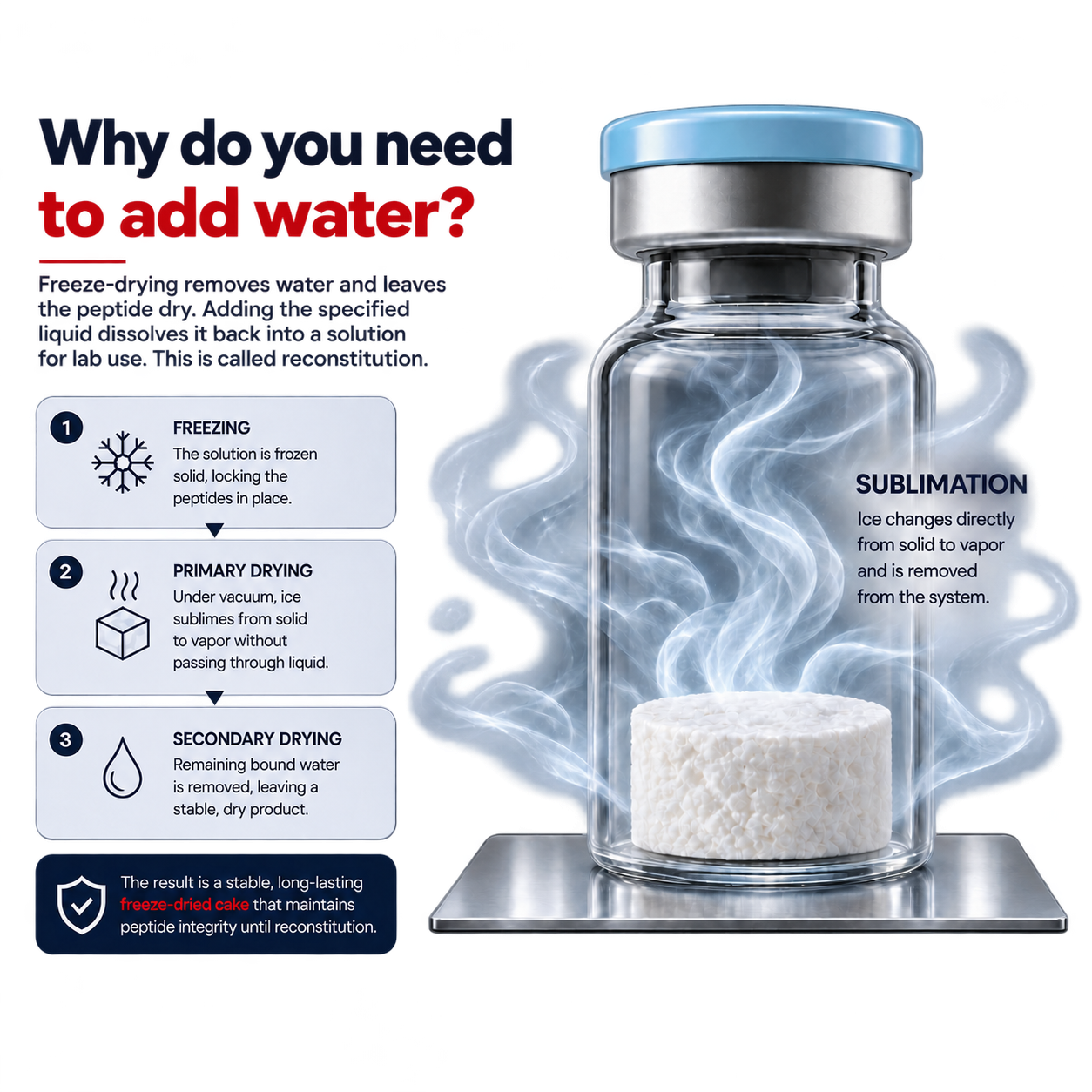
1. Freezing
The shelves cool the peptide solution until much of its water forms ice. The peptide and other dissolved ingredients become concentrated in the material between ice crystals.
2. Primary drying
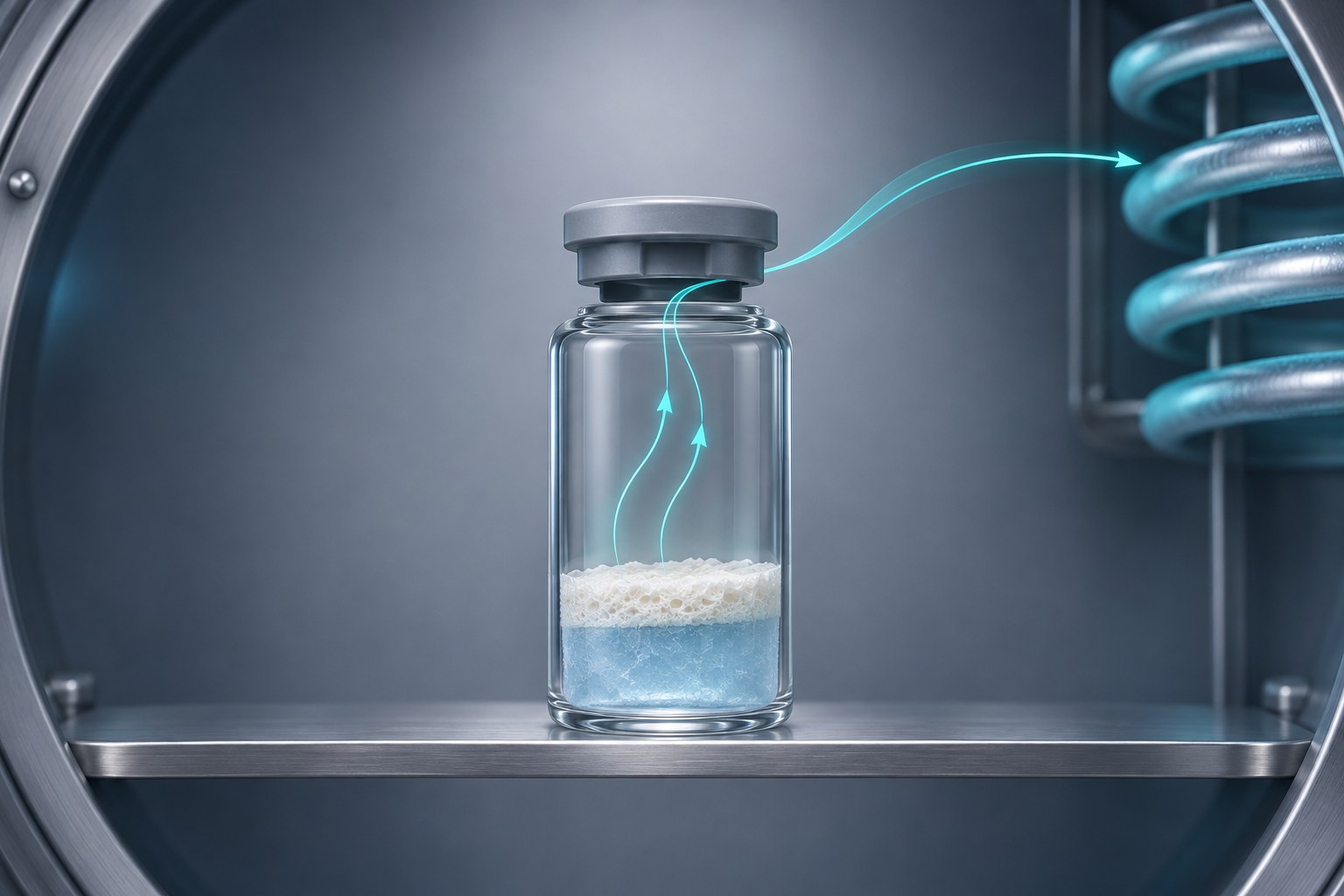
Under vacuum, controlled heat lets ice change directly into vapor through sublimation. The vapor moves to the cold condenser and freezes there, leaving a porous layer in the vial.
3. Secondary drying
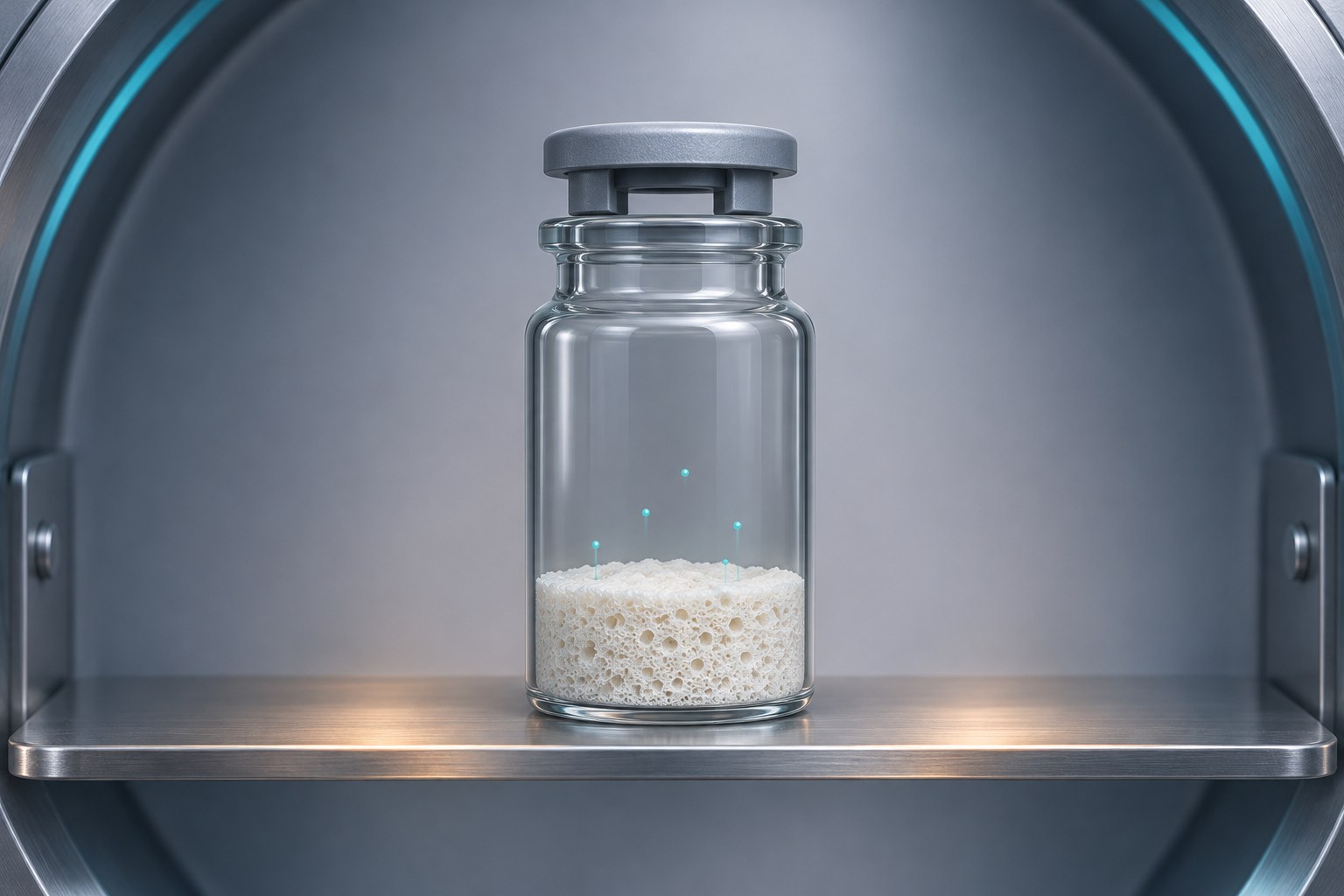
After the ice is gone, gentle warming under vacuum releases more of the water still held in the solid. This is called desorption. The result is a dry solid that often looks like a porous cake.
Why peptides are freeze-dried
Some peptides degrade faster in solution. Removing most of the water can slow water-dependent reactions and improve storage stability for suitable formulations. Shelf life depends on the peptide, the formulation, residual moisture, packaging and storage conditions. Follow the storage guidance for the specific material.
References
For research use only. Not for human or veterinary use. Educational content is not medical advice.