
Payment Options
 Cash App
 Apple Pay
 PayPal
 Crypto (USDC)
$10 USPS Priority Shipping
Estimated delivery: 2–5 business days. Delivery times may vary.
Orders of $500 or more ship free. Final shipping details at checkout.
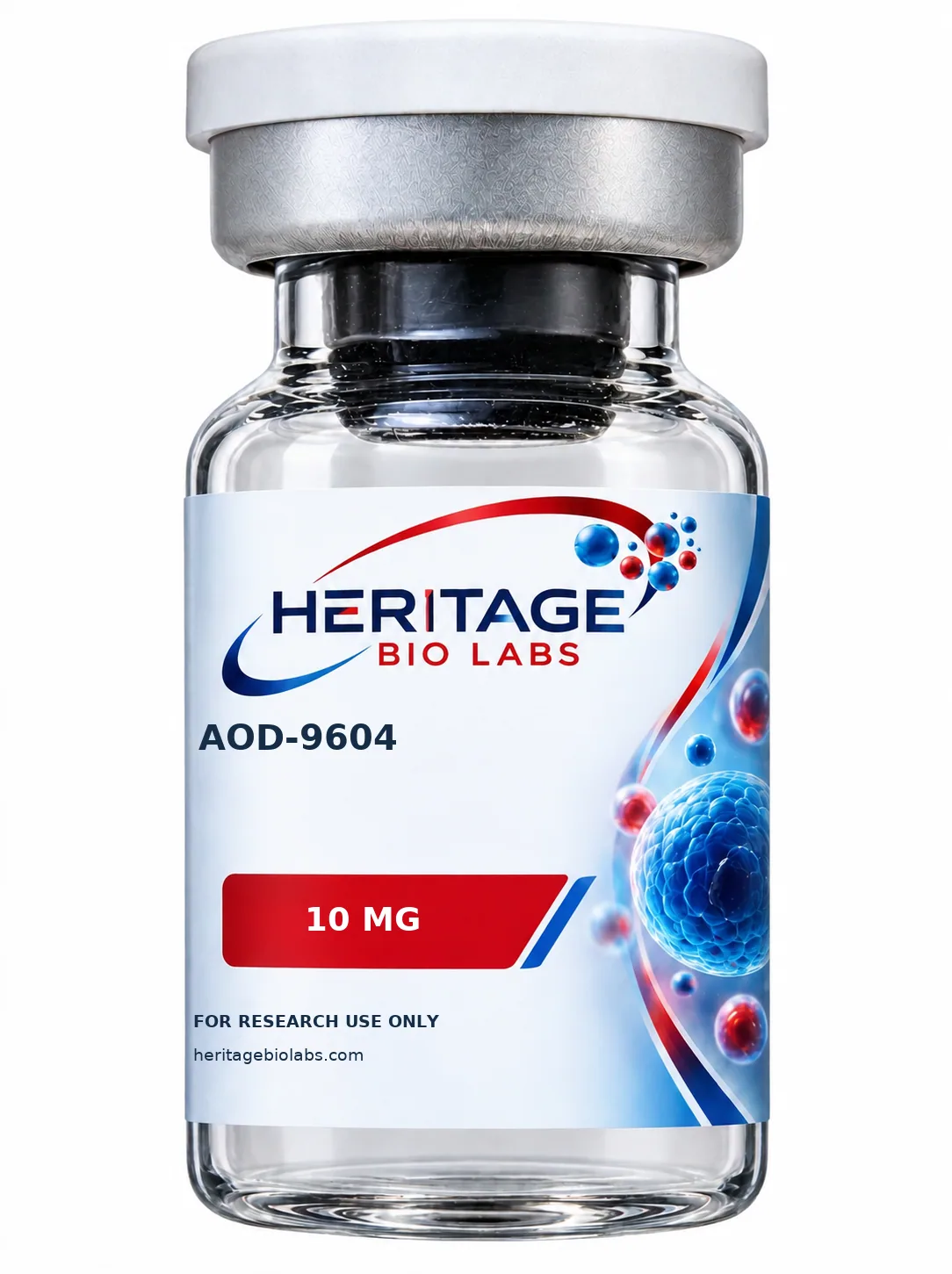
AOD-9604 — 10 mg
$42.74
AOD-9604 is a modified growth-hormone fragment investigated for fat metabolism. Sources describe reduced body fat in obese mice and an obesity-development program whose larger human trial did not show statistically significant placebo-adjusted weight loss. For research use only; not for human or veterinary use.
Full description
Educational research context. The cited studies and supplier descriptions do not verify the identity, testing, or effects of this Heritage product.
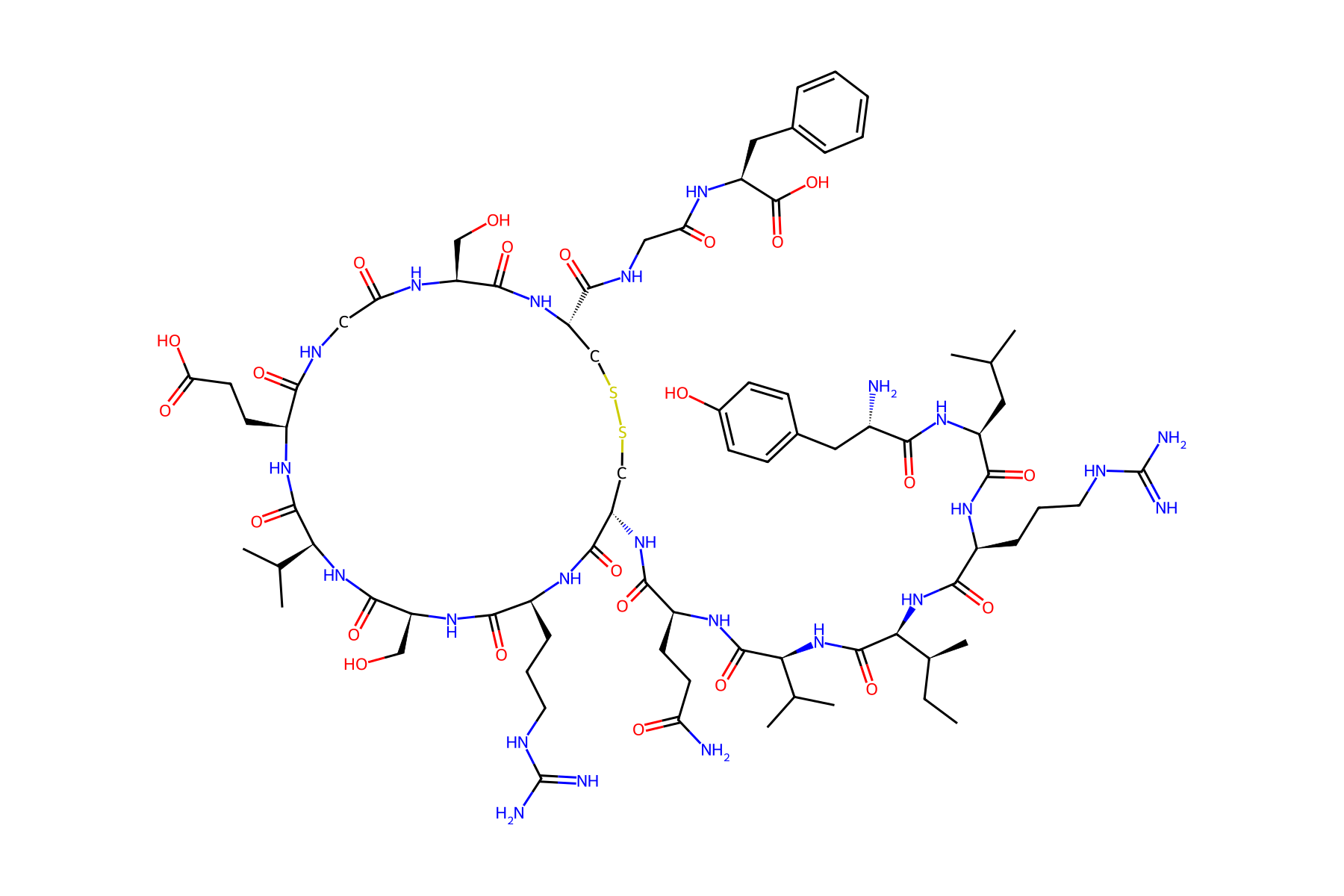
AOD-9604 is a synthetic fragment based on the C-terminal portion of human growth hormone, commonly described as residues 177–191 with an added N-terminal tyrosine. Its development rationale was to investigate fat-metabolism effects separately from the broader growth-promoting actions of intact growth hormone. Umbrella Labs presents it using this fragment identity and emphasizes the distinction from full-length GH. It should not automatically be treated as chemically identical to every product labeled “HGH fragment 176–191.” [1]
In a primary mouse study, Heffernan and colleagues reported reduced body weight and fat mass in obese animals, together with changes in beta-3-adrenergic-receptor expression and lipolytic sensitivity. Experiments involving receptor-knockout mice suggested a more complex mechanism than simple direct activation of that receptor. [2] Human development produced a different outcome: Metabolic Pharmaceuticals’ February 2007 announcement said that its 536-participant phase 2B obesity trial did not achieve statistically significant weight-loss differences from placebo at the specified endpoints, and that development for obesity was being terminated. [3] Thus, sources discuss a fat-metabolism research concept and positive animal observations alongside a negative larger human obesity result, rather than a uniform set of findings.
Sources
- Umbrella Labs—AOD-9604 identitySupplier listing (not independent scientific evidence)
- Heffernan et al.—AOD9604 in obese and receptor-knockout miceLiterature record (study type requires review)
- Metabolic Pharmaceuticals—February 2007 trial announcementExternal reference (requires review)
For research use only. Not for human or veterinary use; not medical advice.